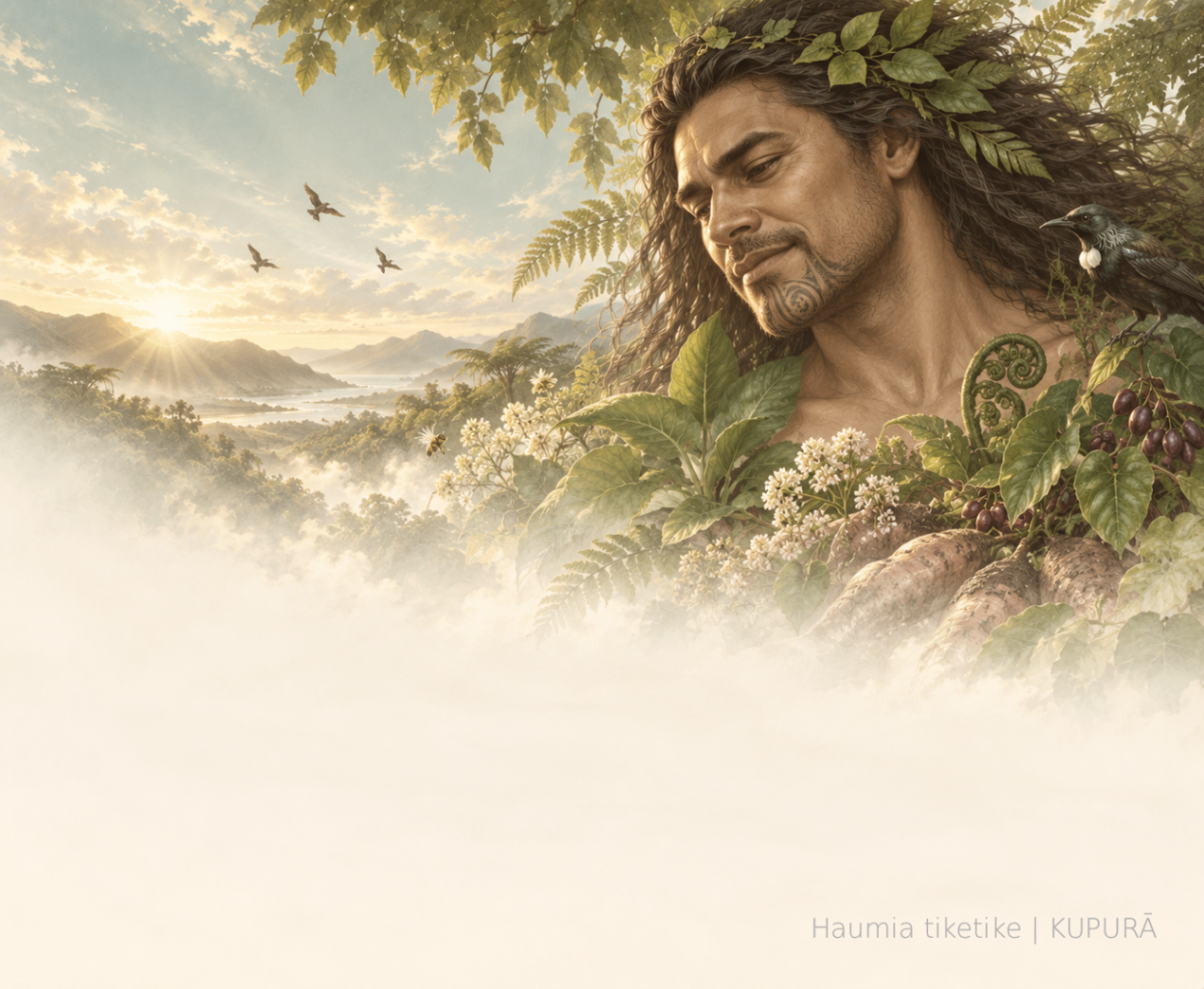
Te kai o te ngahere, te aruhe (Uncultivated food, the fern root)
Say it: HOW-mee-ah TEE-keh-tee-keh · Haumia = ?, tiketike = elevated, lofty.
Haumia is what sustains you when nothing has been planned — resourcefulness, humility, hidden provision.
Te Kāwai (Line of descent)
Te Kore → Te Pō → Papatūānuku → Haumia-tiketike
Te Kōrero (the story)
Uncultivated food — fernroot, berries, what the land gives without being farmed. He hid in Papatūānuku during the storms, so he is also the Atua of taking shelter.
Te Whakapapa (the genealogy)
Son of Ranginui and Papatūānuku; hid with Rongo inside their mother.
His hair remained above the soil — the fern fronds by which he was found.
Where Rongo is the planted garden, Haumia is everything that grows unasked.
Ngā Mana (domains and influence)
Kei Kōnei Rātou (they are present here)
Ngā Huarahi Hono (ways to connect)
Foraging anything wild
Take from the third plant you find, not the first, and never all of it.
A week where nothing is going to plan
Eat something plain and unhurried, and say his name over it. Lean seasons are his.
You want to buy something new
Look for what you already have first. That search is the acknowledgement.
If you are new to this
Notice one edible or useful plant growing untended near where you live.
A Common Misunderstanding
'Wild' food was not lesser food — it was the safety net that carried whānau through hard seasons, and it deserved the same care.
Ngā Taha o te Ora (aspects of life)
Ngā Uara (values)
Māhaki · Humility and gentleness
Humility keeps you fed.
Whakaaro nui · Deep thought
Notice what is already there.
Ngā Pūrākau (the traditional stories)
Told in full, the way they would be shared out loud. Versions differ between iwi (tribe), hapū (sub-tribe) and whānau.
Te huna — the one who hid
Fernroot, shelter, and why hiding was the right call.
About 4 min read
Te kai o te ngahere — the pantry nobody planted
Foraging tikanga, and the rules that kept wild food coming back.
About 4 min read