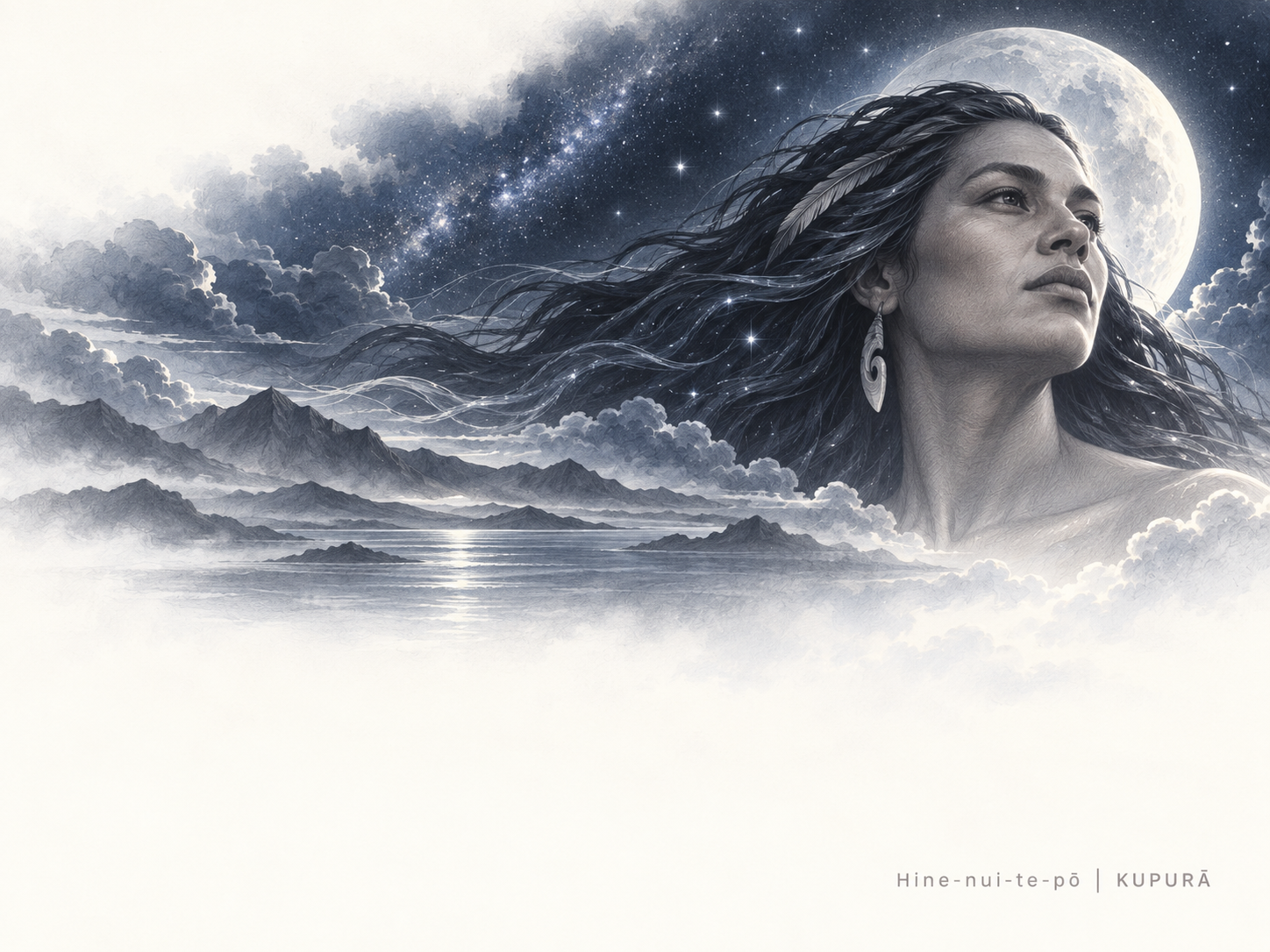
Te pō, te matenga (Night, death and the passage home)
Say it: HEE-neh-noo-ee-teh-PORE · Hine = woman, nui = great, te pō = the night. 'Great woman of the night.'
Hine-nui-te-pō receives us. She is not to be feared — she is the reason a life has a shape at all.
Te Kāwai (Line of descent)
Te Kore → Te Pō → Papatūānuku → Tāne Mahuta → Hine-ahu-one → Hine-nui-te-pō
Te Kōrero (the story)
The one who receives us at the end of life. She was once Hine-tītama, the dawn maiden, and chose to go into the night to care for her descendants there.
Te Whakapapa (the genealogy)
Born Hine-tītama, daughter of Tāne and Hineahuone.
On learning her whakapapa she withdrew to Rarohenga to receive her descendants.
Refused Māui immortality — and so we are mortal.
Sister in some accounts to Māhuika: death and fire in one house.
Ngā Mana (domains and influence)
Kei Kōnei Rātou (they are present here)
Ngā Huarahi Hono (ways to connect)
Before sleep
Say the name of one person who has died. Night is hers; give it to them.
Passing an urupā
Acknowledge it as you pass, and don't eat until you've washed your hands after.
Something has ended
Let it end properly — say so out loud rather than leaving it half open.
If you are new to this
Say the name of someone who has died out loud today. In te ao Māori the dead stay part of the conversation.
A Common Misunderstanding
She is not a death-demon. Death in this worldview is a return to an ancestress who is waiting for you, not an annihilation.
Ngā Taha o te Ora (aspects of life)
Ngā Uara (values)
Whakaaro ki te mate · Remembering death
Remember the ending; it clarifies the day.
Aroha ki te hunga mate · Love for those who have died
Care for those who have gone before.
Ngā Pūrākau (the traditional stories)
Told in full, the way they would be shared out loud. Versions differ between iwi (tribe), hapū (sub-tribe) and whānau.
Hine-tītama — the dawn who walked into the night
The hardest turn in the whakapapa, and why she chose it.
About 4 min read
Te pō — the night, the tangi, and going home
How Māori grief works, and why it takes three days.
About 4 min read