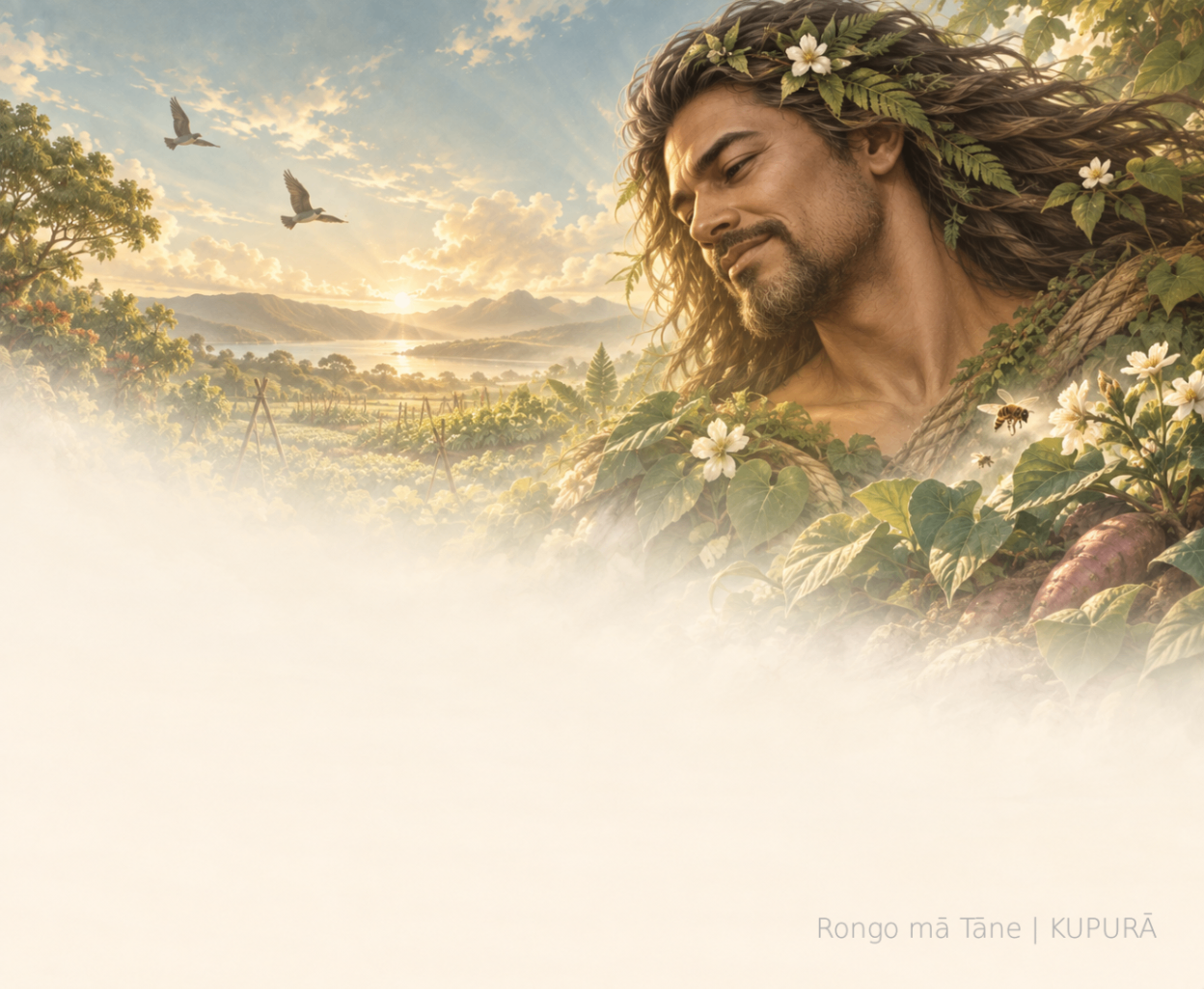
Te māra kai, te rongomau (Cultivated food and peace)
Say it: RO-ngo mah TAH-neh · Rongo = to hear, to feel, to sense; also peace.
Rongo is patience made visible: the kūmara that takes a season, the argument that is settled rather than won.
Te Kāwai (Line of descent)
Te Kore → Te Pō → Papatūānuku → Rongo-mā-Tāne
Te Kōrero (the story)
Peace, and the cultivated food that peace makes possible — especially kūmara. Where Tū is the raised voice, Rongo is the shared meal that ends the argument.
Te Whakapapa (the genealogy)
Son of Ranginui and Papatūānuku; brother and counterweight to Tūmatauenga.
Hid inside Papatūānuku with Haumia during Tāwhirimātea's storms.
Associated with the moon in some traditions — kūmara planting followed the maramataka.
His domain overlaps Papatūānuku's: he works her soil.
Ngā Mana (domains and influence)
Kei Kōnei Rātou (they are present here)
Ngā Huarahi Hono (ways to connect)
Planting anything
Put the first seed or seedling in with his name said over it, and check the maramataka night if you can.
A disagreement is dragging on
Feed the person. Then talk. Rongo's method is provision first.
Harvesting
Give the first of it away before you eat any yourself.
If you are new to this
Share food with someone today, even something small, and eat it together.
A Common Misunderstanding
Peace here is not passivity — it is active work: feeding people, mending relationships, keeping the soil fed.
Ngā Taha o te Ora (aspects of life)
Ngā Uara (values)
Rongomau · Peace
Peace is built, not wished for.
Manaakitanga · Care and hospitality
Hospitality as a form of strength.
Ngā Pūrākau (the traditional stories)
Told in full, the way they would be shared out loud. Versions differ between iwi (tribe), hapū (sub-tribe) and whānau.
Rongo-mā-Tāne — the kūmara and the long peace
Cultivated food, the calendar it created, and why peace is work.
About 4 min read
Te hākari — how a feast ends a thing
Why every serious kaupapa in te ao Māori finishes with food.
About 4 min read