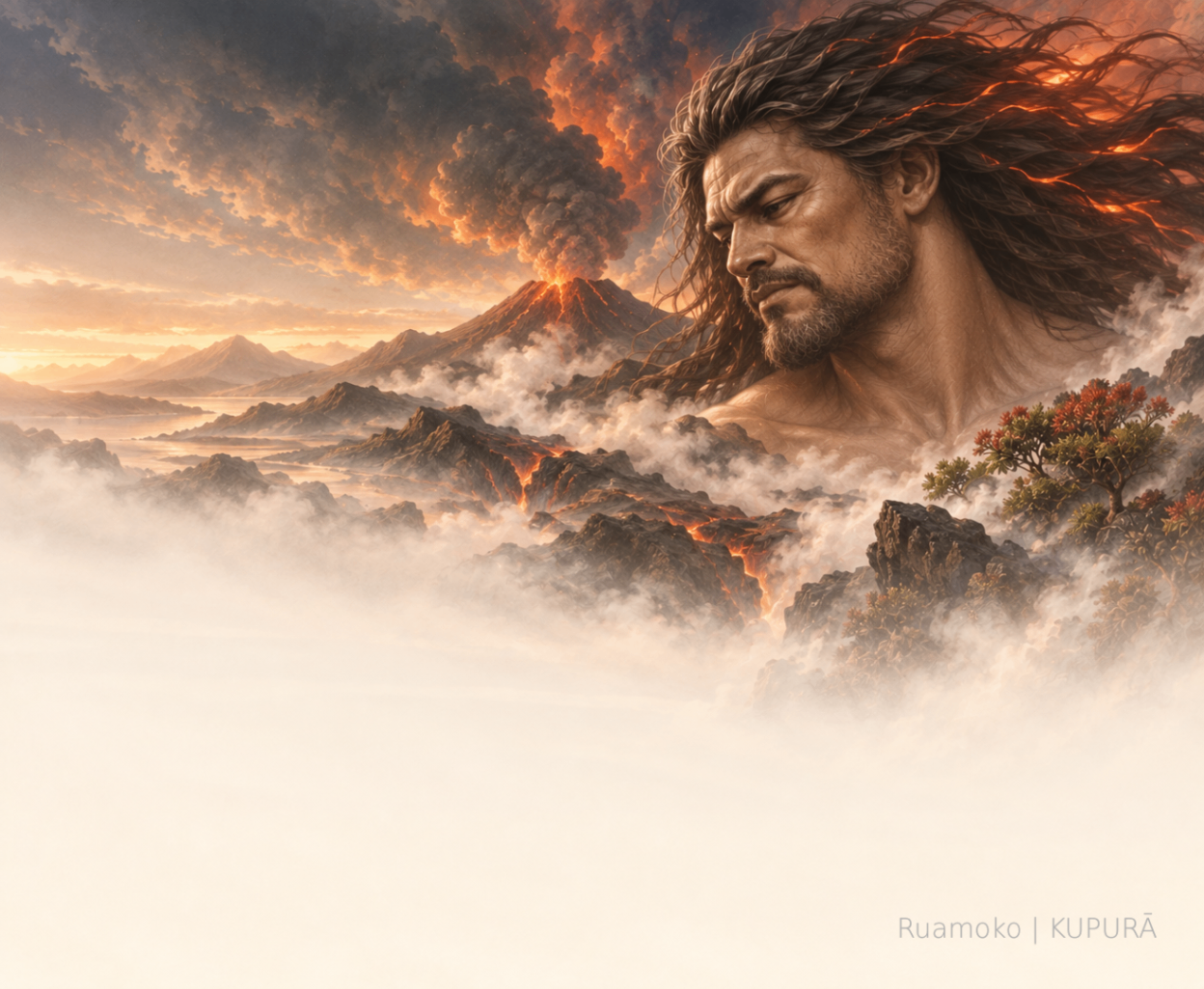
Ngā rū, ngā kaupeka (Earthquakes and the seasons)
Say it: roo-ah-oo-MO-ko · Rua = pit, chasm; moko = lizard, and the tattooed one.
The unborn child still at his mother's breast. Rūaumoko is change from beneath — upheaval that reshapes what was fixed.
Te Kāwai (Line of descent)
Te Kore → Te Pō → Papatūānuku → Rūaumoko
Te Kōrero (the story)
The youngest child, still unborn or nursing inside Papatūānuku. When he turns, the ground shakes and volcanoes speak — earthquakes are a child moving, not a punishment.
Te Whakapapa (the genealogy)
Youngest child of Ranginui and Papatūānuku; never born, never separated from her.
Held at her breast when she was turned to face away from the sky.
Shares geothermal heat with Māhuika.
His turning is said to move the seasons through the year.
Ngā Mana (domains and influence)
Kei Kōnei Rātou (they are present here)
Ngā Huarahi Hono (ways to connect)
After a shake
Say 'kia mārire, e Rua' — be gentle — and then check on someone.
At a hot pool or thermal area
Greet him before you get in. That heat is a relative moving.
The seasons turn
Mark it: pack away one thing from the old season, ready one thing for the new.
If you are new to this
Check that your household is actually ready for a shake. Preparedness is a form of respect.
A Common Misunderstanding
Shaking is not divine anger. It is family movement — which is why the response in tikanga is care and calm, not appeasement.
Ngā Taha o te Ora (aspects of life)
Ngā Uara (values)
Panoni · Change
Change arrives whether invited or not.
Manawaroa · Endurance and resilience
Endurance through the shaking.
Ngā Pūrākau (the traditional stories)
Told in full, the way they would be shared out loud. Versions differ between iwi (tribe), hapū (sub-tribe) and whānau (family).
Rūaumoko — the child who never came out
Earthquakes as family movement, not punishment.
About 4 min read
Te ahi o te whenua — the fire underneath
Volcanoes, geothermal country, and the fire that was carried here.
About 4 min read